BLANKETS: A CASE STUDY
…To be presented at this years Pop Culture Conference at DePaul University!
Echoes, Blankets, & Covers: Digital Reorchestration and Storytelling
Joshua Ramon & Andrew Pope
Pique Audio Visual
Abstract
This paper examines the role of digital reorchestration in contemporary cover production through a case study of Blankets, an album produced using a hybrid workflow that combines MIDI-based composition with live instrumentation. By leveraging the ubiquity of pop music and the accessibility of MIDI data, this project demonstrates how independent producers can rapidly develop foundational arrangements, which are then refined through collaboration and performance. This approach significantly reduces production time and cost while maintaining expressive depth. Beyond technical efficiency, the paper argues that digitally mediated covers function as acts of reinterpretation and cultural preservation, enabling local artists to engage with globally recognized material in ways that reflect personal and communal narratives. Through analysis of workflow, artistic outcomes, and production constraints, this study positions hybrid MIDI-based production as both a practical solution for resource-limited creators and a meaningful contribution to evolving traditions of musical storytelling.
I. Introduction: The Persistence of the Cover Song
The “cover” song generally refers to a reproduction of a previously created musical work. There are many types of cover song- reduplications, reinterpretations, parodies, homages, and more (Mosser, 2008). In the early 20th century, covers tended to be reduplications of well-known folk, religious, and jazz standards. However, by mid-century radio had displaced live performances as the primary means by which individuals listened to music and the term cover emerged to describe reinterpretations that were distinct from the original works (Magnus, 2022). Radio created a new atmosphere in which the public, especially the youth, were drawn together into a common popular culture with its own icons and frames of reference (Kramer, 2013). As popular songs took on deeper meaning in the public consciousness amid the Civil Rights Movement and Vietnam War, artists like Linda Ronstadt, Ry Cooder, and Lani Hall established themselves as top-selling acts through their reinterpretation of an eclectic mix of pop standards, blues hits, and obscure jazz (Plasketes, 2005).
Such reinterpretations of popular songs, shaped by both technological affordances and narrative intent, transcend mere imitation and operate at the level of Shakespearean reinvention. This effect is facilitated by perception. When an individual finds art to be beautiful or pleasing it can have a deep emotional and psychological impact (Mastandrea et al., 2019). For instance, the Grateful Dead developed its live catalog and style around the aggressive reworking of traditional folk music (Longcroft-Wheaton, 2020) and built a uniquely large and loyal fandom known as “Deadheads” with its own cultural traits and customs based on group consciousness (Pearson, 1987). The dissemination and expansion of Dead culture was made possible by the new availability of portable tape recorders, and the army of amateur “tapers” who determinedly recorded every Grateful Dead performance (Harvey, 2009). This process helped draw the audience and band together around a shared subculture of signs, symbols, and myths that took on the form of an implicit religion (Carrasco, 2021).
Audience and band recognition of popular songs made covers easier and less risky to produce, which made them more appealing to the powerful recording studios (Cusic, 2016). While this remains true, covers serve a new purpose as well. Artists are no longer constrained by access to live musicians or professional studios, and they increasingly utilize digital tools to reconstruct and reinterpret existing works (Katz, 2010; Théberge, 1997). This has resulted in the professional recording industry losing its monolithic influence over the means of cultural-artistic production in the field of music, and a subsequent increase in the output and activity of DIY producers and musicians (Prior, 2010). These individuals can generate professional-quality covers of songs to convey subtle political messages, explore unique themes, and subvert traditional viewpoints on issues like gender and identity (Steinskog, 2016).
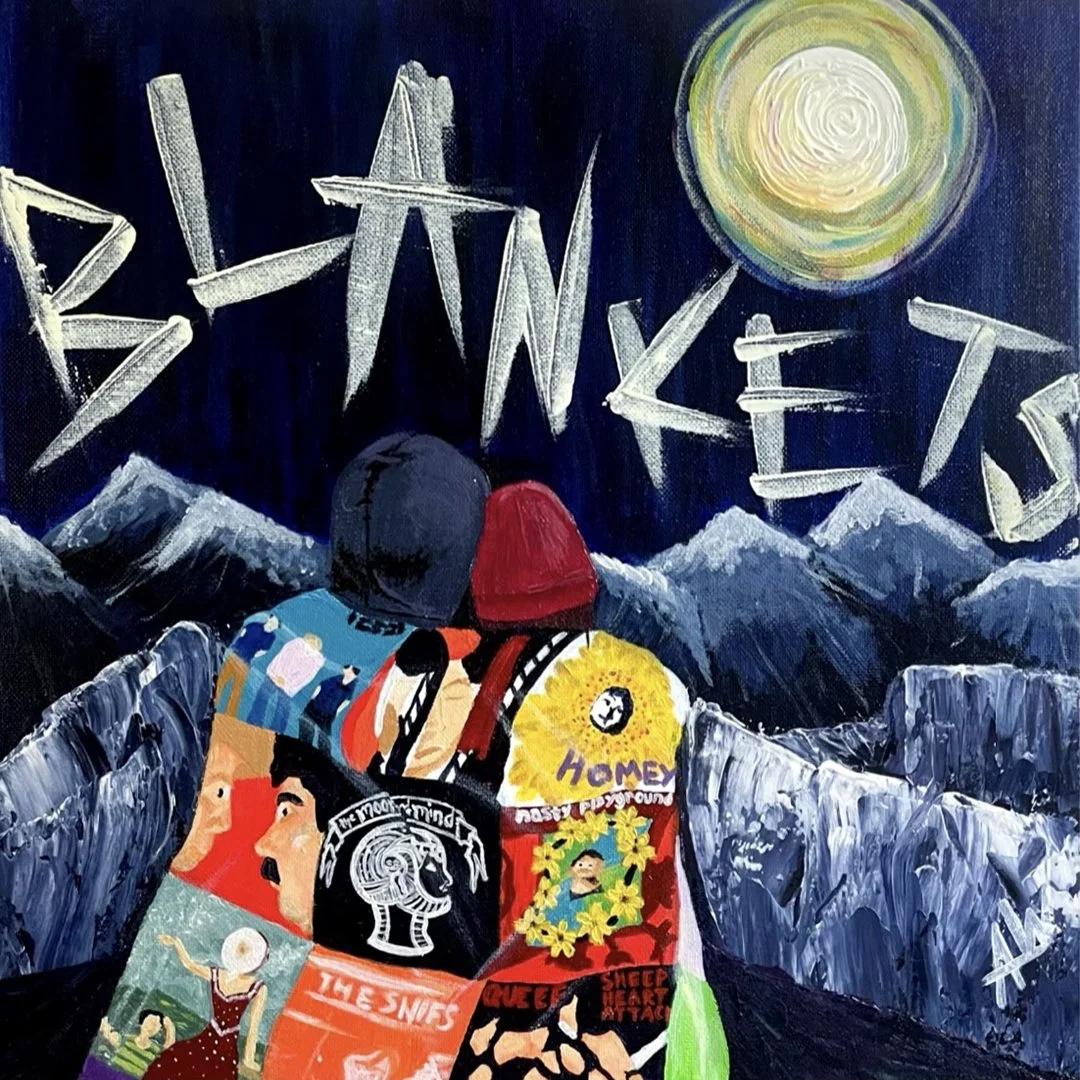
This paper draws on both technical analysis and primary-source testimony to illustrate the purpose, process, and outcomes of digital reorchestration. Through a case study of Blankets, a cover album recorded by Ayla Winegar and produced by Pique Audio Visual, we argue that contemporary production of hybrid MIDI-based covers constitutes a form of authorship because it reconfigures musical structure and narrative meaning in ways that exceed reproduction. Our analysis incorporates technical observations about the recording process as well as reflections from vocalist Ayla Winegar, whose performance and narrative perspective are central to the album’s construction. Her insights provide a first-hand account of how digital production environments shape both artistic intent and emotional interpretation.
II. Digital Reorchestration: MIDI as Scaffold and Process
Digital reorchestration refers to the process of reconstructing existing musical works through MIDI-based frameworks and virtual instrumentation, allowing for reinterpretation at both the structural and expressive levels. While MIDI plays a central role in the production of Blankets, it does not function as a final substitute for live performance. Instead, it operates as an initial scaffold—a flexible framework used to map out arrangements, test ideas, and construct early versions of songs. These “principal tracks” provide a working blueprint that can be rapidly developed and iterated upon.
As production progresses, MIDI elements are selectively replaced with live instrumentation wherever possible. This hybrid approach allows for both efficiency and expressiveness: the structural clarity and speed of MIDI-based composition are combined with the nuance and variability of live performance. In practice, early mockups were gradually reshaped through collaboration, overdubbing, and re-recording, resulting in final arrangements that retained the intentionality of the original programming while incorporating human performance.
This workflow also enabled the involvement of additional collaborators under constrained conditions. Foundational arrangements could be developed independently, while live contributions—whether recorded in shared sessions or remotely—were integrated into an evolving structure. In some cases, parts were recorded by the producer, while in others, collaborators contributed instrumentation that replaced or enhanced MIDI-based elements. In this sense, MIDI functioned less as a replacement for musicianship and more as a compositional draft—one that was refined, overwritten, and ultimately embodied through live performance.
III. Case Study: Blankets as Narrative Object
While the technological framework of Blankets is essential, the album’s significance lies equally in its narrative construction. Curated and performed by Ayla Winegar, the album presents a sequence of cover songs that collectively form a cohesive emotional arc centered on identity, transformation, and self-discovery. Importantly, this narrative was not imposed from the outset but emerged organically. As Winegar explains, “We started with a couple songs that we were both excited about, and then a story naturally emerged. It felt like it was staring me right in the face—I knew I had to run with it.” This reinforces the idea that the album functions less as a curated playlist and more as a constructed narrative artifact. The selection, sequence, and motivation of the covered songs serve to capture a distinct moment and perspective.
Individual songs undergo significant reinterpretation within this framework. Winegar notes that “singing any song about a woman originally performed by a man changes the immediate meaning,” highlighting how performance context alone can shift narrative perspective. In the case of “Maneater,” this shift reframes the song’s tone from critique to admiration. These transformations demonstrate that Blankets does not simply reinterpret songs individually but recontextualizes them collectively. The sequencing of tracks produces continuity—an effect more commonly associated with concept albums than with collections of covers—ultimately positioning the album as an original narrative work constructed from existing material.
IV. Digital Production and Vocal Performance
The production methodology of Blankets not only shapes its sonic qualities but also influences performance. For Winegar, the recording process represented both a technical and personal milestone: “I actually didn’t have recording experience prior to Blankets. This felt like my first experience with taking music seriously—no, with taking myself doing music seriously.” The digital environment enabled a different approach to vocal performance. Unlike live settings, which often prioritize projection and energy, the studio allowed for subtlety and experimentation. “I realized I could really lean into softer parts of my voice that don’t come through as strongly in a live setting,” she explains. “I could play around with being quiet… and approach emotional moments more delicately.” This hybrid workflow also shaped collaboration. Because arrangements were initially developed through MIDI, live performances were layered onto an evolving structure rather than confined to traditional tracking sessions. This allowed for flexibility in incorporating additional musicians and refining performances over time, resulting in recordings that were both intentional and responsive to the developing identity of each track.
V. Identity, Interpretation, and Emotional Narrative
At its core, Blankets functions as an exploration of identity and emotional transformation. The first track is an original composition that preceded work on the rest of the album. It immediately establishes the album’s narrative and emotional framework and demonstrates its own original, authorial tone. The rich sonic texture of “Elliott” blossoms with joy and speaks directly to the immaculate and untouchable part of the inner soul, yet its lyrics illuminate the stormy feelings of a fractured psyche with phrases like, “my miserable, magnificent, love-sick, silhouette.” These dueling counterpoints reach their denouement with Winegar’s echoing line:
“I don’t know what to do. I don’t know what to do I’m still in love with you I keep on choosing you why won’t you choose me too?”
The song erupts with the heat and friction needed to produce a blazing fire while its groove and emotional tone arrange the terms for the battle ahead. The album then unfolds to reveal a deeply personal narrative shaped through interpretation and performance. An immediate rebellion of heart and youth cries for independence in “Say It Ain’t So” and quickly hardens into a scowl of contempt with “Creep.” But the singer finds her way back from the abyss, shimmering with confidence in “Maneater” and flowering into baroque maturity with seductive renderings of “Sex and Candy” and “Killer Queen.” Redemption seeps through “In an Aeroplane Over the Sea”, and Winegar regains her poise with “Panic.” Reborn, she is at liberty to reflect on her experience with the enlightened and aptly named “Hope is a Melody”, another original composition that neatly synthesizes the experience of Blankets and escorts the listener to their own new beginning. The album’s thematic progression finds deep meaning in not just the tracks, but in their arrangement and orchestration. In its entirety, the work explores timeless human themes and draws upon recognizable pop standards and cultural motifs to situate its audience within a common perspective and tell its story.
Winegar articulates this process as inherently reflective: “The process of making meaning in art is two-sided. The artist intends one meaning, but the perceiver also digests it reflectively… This was a special case where we got to regurgitate that reflection into another work entirely.” Winegar’s assessment reflects theories of remix culture that emphasize reinterpretation as a form of creative authorship (Navas, 2012). The album engages explicitly with themes of queer identity and self-acceptance. As Winegar explains, “Blankets was intended to illustrate a feeling of coming to terms with queer sexuality, complete acceptance of love in all its forms.” This narrative unfolds across the album as an emotional progression. “It starts with an end—a breakup. It moves to introspection… loving the self. And then finding the ability to love in a new way… someone who understands the experiences of being in a body like yours.” The narrative arc transforms the album into a story of loss, reflection, and renewal.
Ultimately, the album’s meaning extends beyond identity alone. When asked to distill its emotional core, Winegar emphasizes self-relationship: “Blankets is about finding love for yourself, within yourself… I don’t believe you can have a fulfilling relationship with someone else without mending the one with yourself first.” This perspective positions the album as both a personal and universal narrative.
VI. Access, Authenticity, and Critique
While digital reorchestration offers significant advantages in terms of accessibility and efficiency, it also raises questions regarding authenticity. Critics of MIDI-based workflows may argue that such methods lack the nuance of live performance or rely too heavily on pre-existing material. However, authenticity is a nebulous concept that often goes beyond originality or even impact; and the distinctions of authentic and inauthentic involve a complex web of social intermediaries who uphold cultural boundaries (Koontz & Joshi, 2017). However, if authenticity is defined by expressive intent rather than adherence to traditional methods, then hybrid digital workflows can be understood as a legitimate and evolving artistic practice (Lessig, 2008).
The legal dimension of authenticity is central to the production and distribution of cover songs. The release of cover recordings requires proper mechanical licensing, and the use of MIDI-based reconstructions may introduce additional complexity. These constraints necessitate careful navigation within established intellectual property frameworks. However, recent developments in U.S. copyright law and digital distribution infrastructure have significantly lowered the barrier to compliance. The passage of the Music Modernization Act established a more centralized and efficient system for mechanical licensing, including the creation of the Mechanical Licensing Collective, which administers blanket licenses for digital uses of musical works (U.S. Congress, 2018; The Mechanical Licensing Collective, 2021).
In parallel, digital distribution platforms have operationalized this process for independent artists. Services such as DistroKid provide integrated mechanisms for securing mechanical licenses when uploading cover songs, allowing creators to distribute their work legally across major streaming platforms with minimal administrative burden (DistroKid, n.d.; Aristake, 2020). In this context, legal compliance becomes a manageable component of the production process rather than a prohibitive barrier. In many cases, the challenge is no longer access to licensing itself, but awareness of the tools and systems that facilitate it.
VII. Conclusion: Reimagining Authorship in the Digital Age
Blankets illustrates a broader shift in how music is created, interpreted, and understood in the digital age. Through the integration of MIDI-based scaffolding, live instrumentation, and narrative-driven curation, the project demonstrates that cover songs can function as original works—vehicles for storytelling, identity exploration, and cultural reinterpretation. Blankets demonstrates a level of aesthetic and structural innovation which warrants a powerful claim on originality (Sibley, 1985). Therefore, digital tools expand the franchise of authorship in ways that are deeply beneficial to individuals and communities. The ability to reconstruct and recontextualize existing material allows artists to engage more deeply with the emotional and cultural resonance of the music they inherit. Winegar’s reflections suggest that this process is not merely technical, but profoundly personal.
In this context, digital reorchestration emerges not as a workaround, but as a legitimate creative framework. As access to production tools and distribution systems continues to expand, the defining characteristic of contemporary music-making may shift from the ability to create from scratch to the ability to reinterpret meaningfully. Blankets stands as a case study in this transition, demonstrating that the future of music may lie not only in new compositions, but in new ways of hearing—and reimagining—the songs we already know.
Aristake. (2020). How to legally release cover songs. https://aristake.com/how-to-legally-release-cover-songs/
Bello, P., & Garcia, D. (2021). Cultural Divergence in popular music: the increasing diversity of music consumption on Spotify across countries. Humanities and Social Sciences Communications, 8(1), 182.
Carrasco, O. (2022). Restive spirits seeking release: the Implicit Religion of the Grateful Dead. Journal of Beliefs & Values, 43(1), 29–39. https://doi.org/10.1080/13617672.2022.2005711
Cusic, D. (2005). In Defense of Cover Songs. Popular Music and Society, 28(2), 171–177. https://doi.org/10.1080/03007760500045279
DistroKid. (n.d.). Uploading cover songs. https://support.distrokid.com/hc/en-us/articles/360013648953
Harvey, K. A. (2009). Embalming the dead: Taping, trading, and collecting the aura of the Grateful Dead (Master's thesis, Tufts University).
Katz, M. (2010). Capturing sound: How technology has changed music. University of California Press.
Koontz Anthony, A., & Joshi, A. (2017). (In)authenticity work: Constructing the realm of inauthenticity through Thomas Kinkade. Journal of Consumer Culture, 17(3), 752-773.
Kramer, M. J. (2013). The republic of rock: Music and citizenship in the sixties counterculture. Oxford University Press.
Lessig, L. (2008). Remix: Making art and commerce thrive in the hybrid economy. Penguin Press.
Longcroft-Wheaton, O. (2020). The stylistic development of the Grateful Dead: 1965-1973 (Doctoral dissertation, University of Surrey).
Mastandrea, S., Fagioli, S., & Biasi, V. (2019). Art and psychological well-being: Linking the brain to the aesthetic emotion. Frontiers in psychology, 10, 430007.
Mosser, K. (2008). Cover songs: ambiguity, multivalence, polysemy. Popular Musicology Online. https://ecommons.udayton.edu/phl_fac_pub/26
Navas, E. (2012). Remix theory: The aesthetics of sampling. Springer.
Pearson, A. (1987). The grateful dead phenomenon: An ethnomethodological approach. Youth & Society, 18(4), 418-432.
Plasketes, G. (2005). Re‐flections on the Cover Age: A Collage of Continuous Coverage in Popular Music. Popular Music and Society, 28(2), 137–161. https://doi.org/10.1080/03007760500045204
Prior, N. (2009). Software sequencers and the democratization of the recording studio. Popular Music, 28(1), 81–99.
Prior, N. (2010). The rise of new amateurs: popular music, digital technology, and the fate of cultural production. In J. R. Hall, L. Grindstaff, & M. Lo (Eds.), Handbook of Cultural Sociology (pp. 398-407). Routledge.
Reynolds, S. (2011). Retromania. Faber & Faber.
Sibley, F. (1985). Originality and value. British Journal of Aesthetics.
Steinskog, E. (2016). Queering Cohen: Cover Versions as Subversions of Identity. In G Plasketes (Ed.), Play it Again: Cover Songs in Popular Music (pp. 139-152). Routledge.
The Mechanical Licensing Collective. (2021). The Mechanical Licensing Collective explained. https://blog.songtrust.com/the-mechanical-licensing-collective
Théberge, P. (1997). Any sound you can imagine. Wesleyan University Press.
U.S. Congress. (2018). Music Modernization Act. https://www.congress.gov/bill/115th-congress/house-bill/1551